

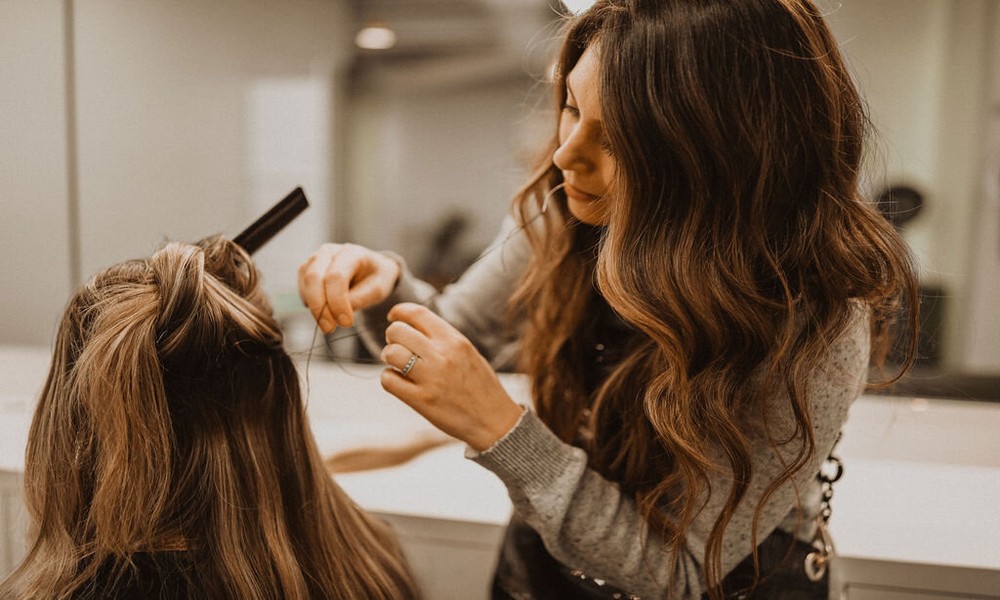
Because of their adaptability, hair extensions are perfect for people who struggle to stick to a style. With just a few hair bundles. You may rapidly achieve the look of your desires in terms of length, volume, and color.
However, there is something you must know from experts. How can you determine which extension installation technique is ideal for your requirements?
As the beauty industry has expanded. So has the desire for new techniques, styles, lengths, and colors.
It should come as no surprise that both cosmetologists and beauty specialists are involved. They are interested in learning about the different kinds of NBR additions. Also, the hair extensions Houston that are available. As well as which technique works best for clients.
Anyway, make sure to visit professionals. You can always set up a meeting for your consultation.
Micro-Link or Cold Fusion
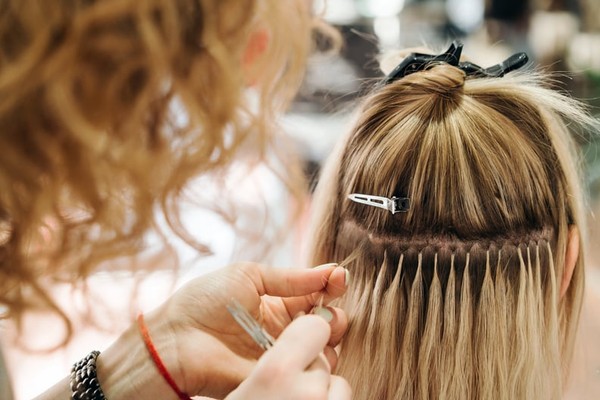
These are used to secure individual extension points to small wefts. A specialized plier is used to clamp a nano-bead or micro-ring to each tip. The tips of the beads are arranged in tidy rows and are tinted to adapt to your natural mane.
When applied properly, this technique can be highly safe. It is an unobtrusive way to attach the addition to the mane. Of course, without the need for heat or adhesive glue.
Usually made of copper, nano beads are more appropriate for those with thicker tresses. They are the most covert way to extend locks because they’re smaller by 90% than micro rings.
Despite their small size, micro rings are a separate technique that is frequently quicker to put in and remove. Regardless of the technique, it is advised that you only employ silicone-lined rings or beads. Because the silicone will shield your natural strands and stop them from slipping.
If you often tie up your tresses, you should use individual tips. That’s because unique bonds provide your weaves more freedom.
Tape-In
These are a semi-permanent alternative that is taped in. After clip-ins, tapes are the fastest and most straightforward way to add and remove additions. This temporary technique necessitates the help of a qualified, experienced stylist.
Adhesive glue is used to attach tapes, which are typically one inch wide, to the tresses. Because tape-ins are applied to so many locks. They do not strain and destroy strands as much as other techniques.
Because tape-ins are the simplest to put on and take off while keeping an inconspicuous appearance. They are the most preferred semi-permanent technique. They are utilized by celebrities and elite stylists. Look at https://graziamagazine.com/articles/beyonce-just-made-us-want-to-grow-our-hair-long/; it’s a good example.
Experts give the face a blunt framing by thickening a short bob along the front of your hair.
When used properly, this produces the least amount of long-term harm to your natural locks.
Sew-In or Weave
Weaves, which resemble clip-ins, are long wefts of strands stitched to layers of the tresses you have naturally. The mane is either attached using a micro-ring or braided. These are sewn using a needle and thread.
This technique is only appropriate for people with thicker tresses. Because weaves can put too much strain on previously damaged or fine mane. If you have highly textured or thick tresses. Weaves are an excellent alternative for your extension.
Use specialized conditioning products. Hydrate the nape, scalp, and margins at least once a week. Another common suggestion is to wash with a particular protein shampoo to avoid weakening and damage.
Every 6-8 weeks, the weave needs to be taken out. Particularly if you’re trying to develop your own mane. You must put on a full weave in the strands for no more than 4 months. Because it will hinder the progress of your natural tresses.
Clip-in
A strand of curved pieces held together at the base by silicone or fabric makes up clip-in wefts. There are ready-to-use clips fastened to this base. Cutting strands into your very own natural locks is all that is required!
Because they can be removed and reattached at any time. These are the least permanent. In contrast to some of the other techniques, applying clip-ins at home takes five to fifteen minutes.
It’s one of the most well-liked kinds of additions. But if you don’t install them appropriately, they can be harmful and cause hair loss.
But these approaches aren’t the only reasons for bad tresses. Learn about environmental issues as well – click this to read further.
Fusion and Pre-Bonded
Also known as keratin bond extensions. These are attached by fusing a pre-adhesive attachment tip to small portions of strands using a hot clamp.
Pre-bonded techniques are frequently a preferable choice for people with finer manes. Because they don’t strain the roots of your natural locks as much as other permanent techniques.
If your locks have been harmed by excessive processing or heat styling. Your hairdresser might suggest against fusion bonds. Since hot fusion will harm your natural mane further and prevent healthy mane growth.
The management and treatment are comparable to those of natural locks. The additions will have to be moved every 4-12 weeks, but you can still use your standard products. Because of the many chemicals in the adhesive. This may also result in hair loss, breakage, and irritation of the scalp.
Because they can remain for up to 4 months, they are regarded as semi-permanent. This depends on the kind and development of your own locks.
